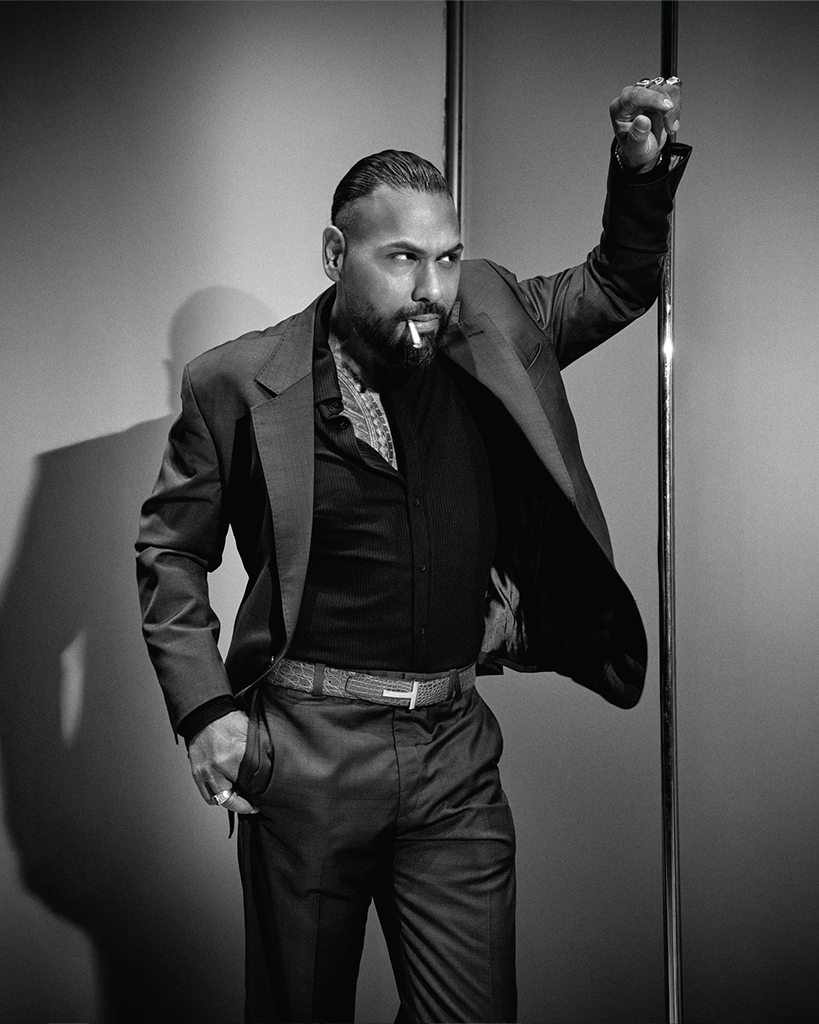
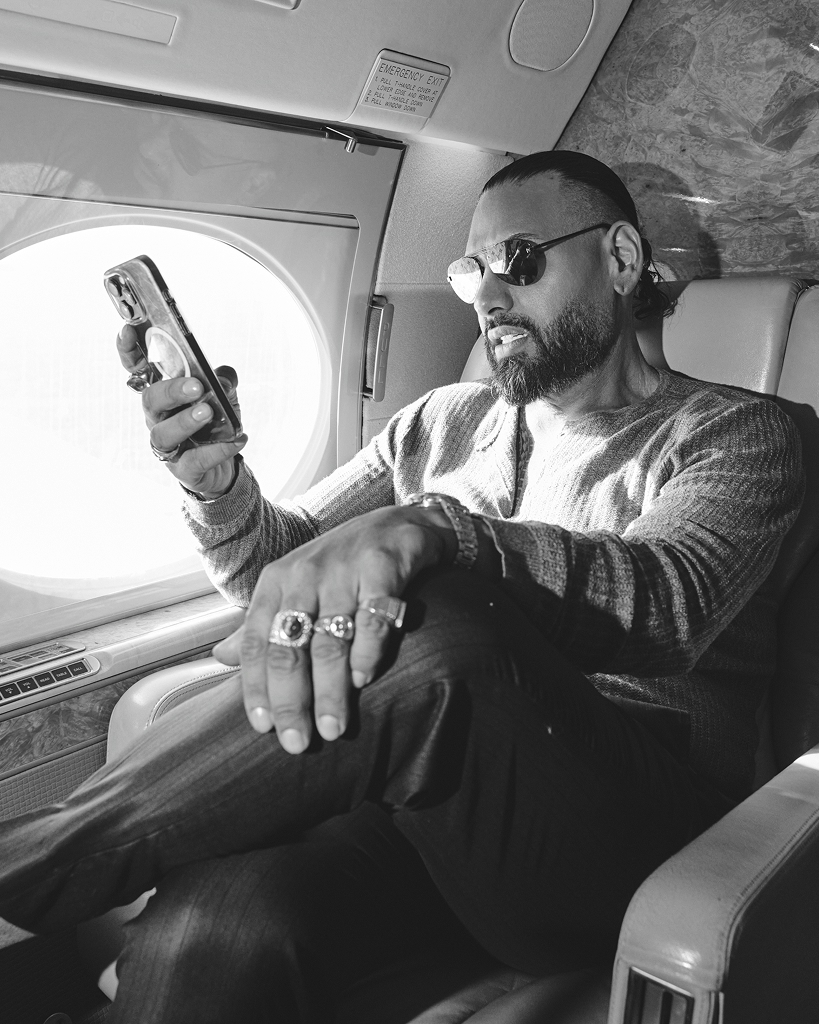
The Identity Behind the Style
“It is my business card, brand identity, how you dress, how you look, how people look at you. That is what reflects who you are.”
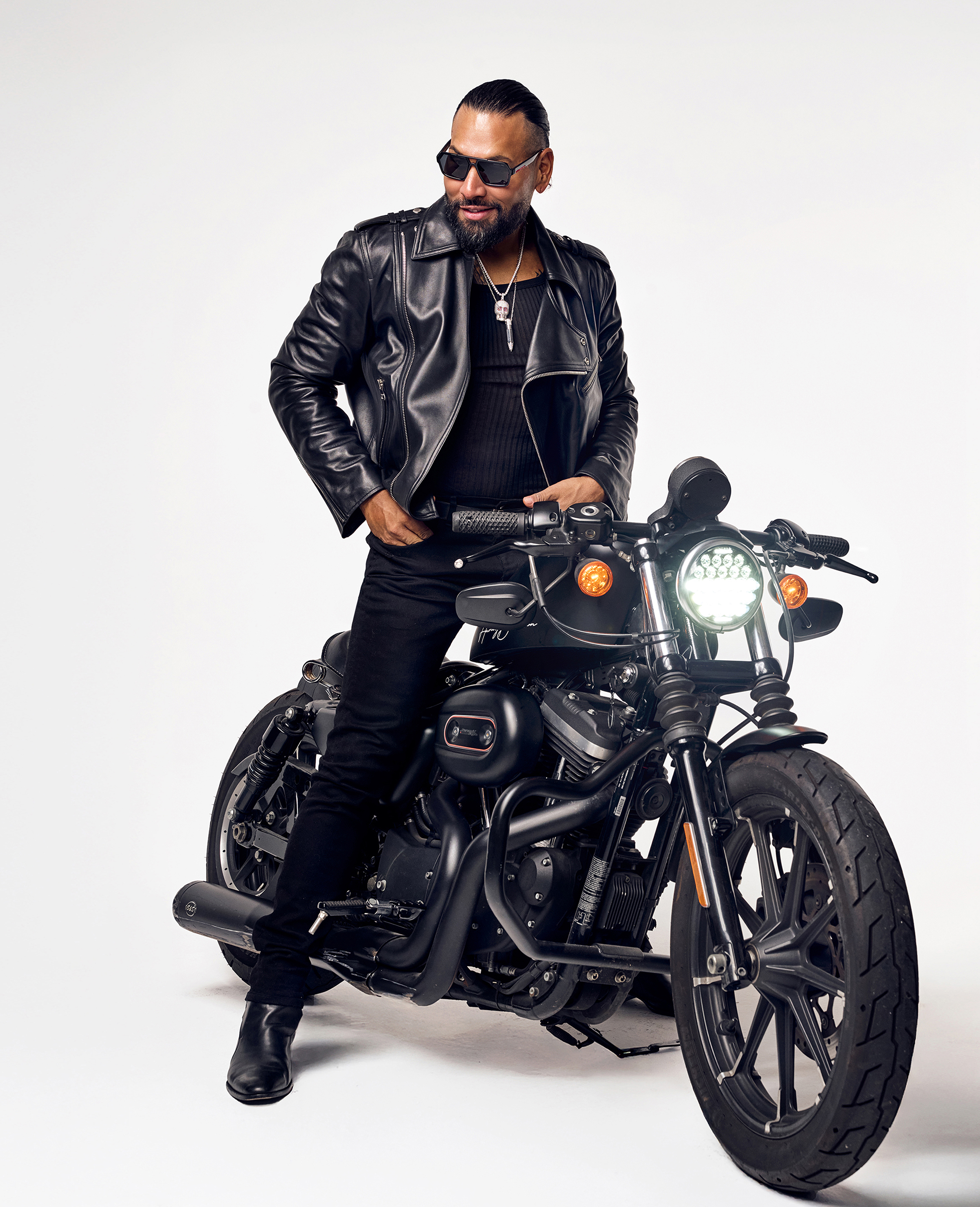
Jas is on set for a photoshoot, sitting comfortably on a motorcycle under the soft buzz of studio lights. He is dressed in a black leather jacket, dark jeans, sunglasses, and the skull necklace that has been a staple of his style for decades. The look settles on him naturally. Rugged but controlled. Bold without trying. He rests into the seat with a quiet confidence, the kind that shifts the entire room without demanding attention. His presence speaks before he ever opens his mouth.
When the conversation turns to style, his perspective is immediate and certain. In his words, “It is my business card, brand identity, how you dress, how you look, how people look at you. That is what reflects who you are.” For Jas, clothing is not a costume or a performance. It is an intention. It is clarity. He believes people form a perception long before they hear you speak, and that perception should reflect the standards you actually live by. “When you want people to perceive a certain thing, you want to look a certain way; that is, you have to dress that part too.”
He has always dressed with purpose. If he walks into a serious meeting, he respects the space by arriving prepared. If he steps into a gym, he dresses like someone who came to work. He puts it plainly. “You are not going to wear a suit going to the gym the same way. You are not going to wear gym clothes going to a meeting with bankers or venture capitalists.” His style is not about rules. It is about respect. It is about showing up with intention and letting your discipline speak for you.
Even though he pays attention to detail, Jas does not chase trends. He has seen cycles come and go. “Fashion circles. Every 15 years comes back to what it was before. 15 years later, turns back around, just with minor changes.” He has no interest in following the crowd. “I like to do what I like to do. I like to wear what I like to wear. I like to wear what looks good on me and what I feel comfortable in, and not what other people tell me to do.”
His style today is the result of the person he has grown into. More confidence. More ownership. A version of himself who knows what works. And it has nothing to do with labels. “It is not about wearing designer. It is not about having to wear a T-shirt that is 1000 or 2000 dollars, or a jacket that is 5000 dollars, or things like that. It is about looking good in whatever you wear.” Then he adds the line that says everything. “With a good body, you wear a 5-dollar T-shirt, you look good in it.”
When asked what separates a man with style from a man who simply gets dressed without thought, he does not hesitate. “They have no sense for design. They have no sense for fashion.” To him, appearance is an extension of discipline, a mirror of the habits that shape a person’s life. “What you wear, how you dress, how you appear, how you conduct yourself, is your business card.” And then the line that reveals how he evaluates character. “If they cannot take care of themselves, they cannot take care of anything else.”
There is one detail that never changes, no matter what he wears. The skull necklace. “Everybody knows me for always wearing the skull necklace, always having skulls, things like that.” If you ask him what it means, he does not elaborate. “Those that do not know what it means, Google it.” The meaning is his, not something he feels the need to explain. “I have been wearing skulls… at least 25 years. 20–25 years. It is nothing. It is not new.”
On set, the biker-inspired look he wears feels instinctive. Comfortable. True. His voice carries a note of satisfaction as he looks down at it. “The outfit today represents me, who I am. This is what I love, the biker style. It is great. It is fashionable. It is sick, it is cool.”
What makes Jas’s style recognizable is the authenticity behind it. He is not dressing to create a persona. He is dressing in alignment with the one he already lives. Every choice reflects intention, clarity, and a deep sense of self. Nothing forced. Nothing borrowed. Nothing exaggerated.
Jas is not trying to send a message with the clothes he wears. The message is already there.